In Geometry Dash, the regular difficulties each come with their own star range: an Easy level is worth 2 stars, an Insane 8 or 9. Demons break that pattern. A demon is worth 10 stars no matter how hard it is, so a level that takes a skilled player an afternoon pays exactly the same as one that took its verifier months.
To make that range readable, update 2.1 (released in January 2017) split demons into five faces: Easy, Medium, Hard, Insane and Extreme Demon. Before then every demon wore the same red face. When the tiers arrived, existing demons started at Hard Demon and moved as votes came in, which is why some older levels still carry tiers that players dispute.
Where the demon tier comes from
The star rating and the decision that a level is a demon at all come from RobTop, the game's developer, who is the only person who can rate levels. Which of the five demon faces a level shows is driven by the community's difficulty votes. We go through the whole pipeline in How Geometry Dash Levels Get Rated.
Two consequences matter if you are guessing. First, the tiers are a consensus, not a measurement, so two Hard Demons can feel very different. Second, the boundary between neighbouring tiers is soft: plenty of players will tell you their hardest Medium Demon was harder than their easiest Hard Demon.
The five faces
What each tier usually feels like to play, and what tends to give it away on video. These are tendencies, not rules.

The first demon most players beat. Usually a level that is long and consistent rather than brutal, with one or two sections that need real practice.
On video: Gameplay that would pass for a hard Insane, but sustained for the full length with no breather sections. Classic first demons include RobTop's own The Nightmare and The Lightning Road.
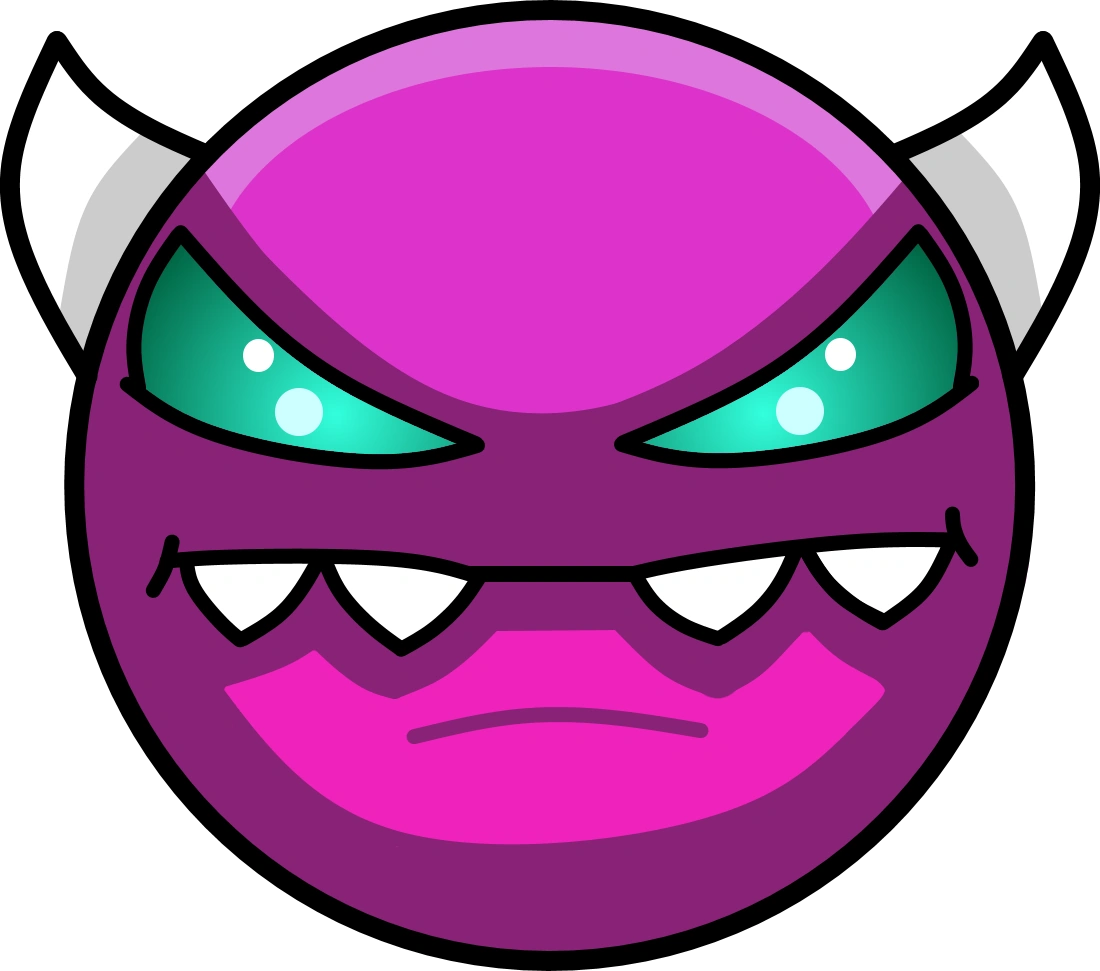
A clear step up. Most of the level is comfortable for an experienced player, but there is usually at least one part that takes dozens of attempts on its own.
On video: Tighter wave and ship corridors, faster speed portals, and the first appearance of timings that look more like memorisation than reaction.

Where demons stop being an event and start being a project. Expect hundreds or thousands of attempts for a typical player.
On video: Dense sections back to back, dual modes, frequent gravity and size changes, and click patterns that would be hard even if you knew them by heart.
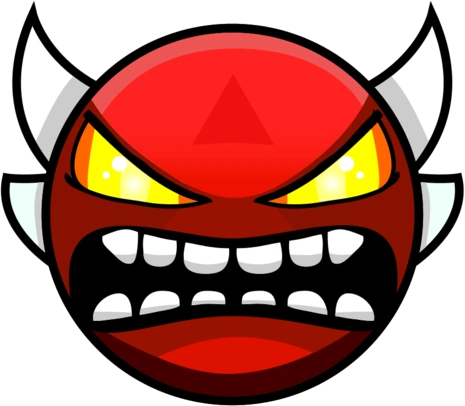
Reserved for players with a long list of completed demons. Difficulty is high from the first second to the last, and practice runs are long.
On video: Very fast gameplay with almost no visual space around the player, spam sections, straight-fly ship parts and wave corridors one block tall.

The hardest rating in the game, and the widest. It covers everything from a player's first extreme to the levels at the very top of the community Demonlist.
On video: Precision that looks almost unfair on video. Riot's Bloodbath, verified in 2015, is the level that made the extreme face famous.
Insane or Easy Demon?
The line between the top regular difficulty and the bottom demon tier is the one players argue about most. On paper it is the biggest jump in the game: from 8 or 9 stars to 10, and from a level anyone can rate to one that needs RobTop's demon stamp. In practice the hardest Insanes and the easiest Easy Demons overlap a lot.
The most reliable cue is length under pressure. An Insane often mixes hard sections with easier stretches, while even an easy demon tends to keep the pressure on from start to finish. In Dashdle, Insane and Easy Demon also sit next to each other on the scale, so if you are torn between them either guess still earns at least 60 points.
Reading a demon from its gameplay
- •Watch the gaps, not the decoration. How much space does the player have in the wave and ship sections? One or two blocks of room is a strong signal for the upper tiers.
- •Count the speed portals. Sections at the fastest speeds, especially in wave or ship, show up far more often in Hard Demons and above.
- •Look for memory. Fake paths, invisible obstacles and blind jumps are common in harder demons, where a level is learned rather than read.
- •Do not trust the visuals. A level with heavy effects and a fast song can look terrifying and still be a Medium Demon. Plain, low-detail levels often hide some of the hardest gameplay.
- •Extreme is a wide bucket. If the gameplay looks harder than anything you have seen labelled Insane Demon, guess Extreme; nothing sits above it.
Five neighbouring tiers that all pay ten stars make demons some of the hardest levels to guess, and the levels that fool the most players end up in the weekly Elite Challenge. The best way to calibrate is volume: Practice Mode has a hard mode that serves demons only.
TL;DR: every demon is worth ten stars, and since 2.1 the five faces show roughly how hard it is. RobTop decides a level is a demon; the community's votes decide which one. Judge a demon by its space, speed and memory, not its decoration.